Insights
Germany at World Cup 2026: With the Golden Generation Gone, Where Does the Dream Go Next?
More than a decade after lifting the World Cup in Brazil, Germany head into a major tournament for the first time without a single survivor from the class of 2014. A young and talented squad now faces the challenge of restoring one of football’s greatest powers to the top of the global stage.
A New Era Begins Under Heavy Expectations
“There is an end to everything — except sausages, which have two.”
The old German saying feels strangely fitting for a national team entering the end of one era and the uncertain beginning of another.
For the first time since their triumph at the 2014 FIFA World Cup in Brazil, Germany will arrive at a major tournament without any veterans from that title-winning squad. Following EURO 2024, Manuel Neuer, Toni Kroos and Ilkay Gundogan all stepped away from international football, taking with them more than 320 combined caps and leaving behind a team short on elite-level tournament experience.
Julian Nagelsmann’s side endured a shaky start to qualifying with a 0-2 defeat against Slovakia, a result that immediately raised doubts over the team’s direction. But panic quickly faded. Germany responded with four consecutive victories before crushing Slovakia 6-0 in the decisive rematch to secure top spot in the group.
Even more impressively, Germany achieved qualification despite lengthy injury absences for Antonio Rudiger, Marc-Andre ter Stegen and Jamal Musiala. All three are expected to return in time for the tournament, although Emre Can remains sidelined after suffering an ACL injury.
That means less celebrated figures will now be asked to shoulder greater responsibility. Goalkeeper Oliver Baumann, who turns 36 in June, performed admirably during qualifying — but replacing a figure like Neuer is an entirely different challenge.
Talent Is Not the Problem
Germany still possess undeniable quality across the pitch.
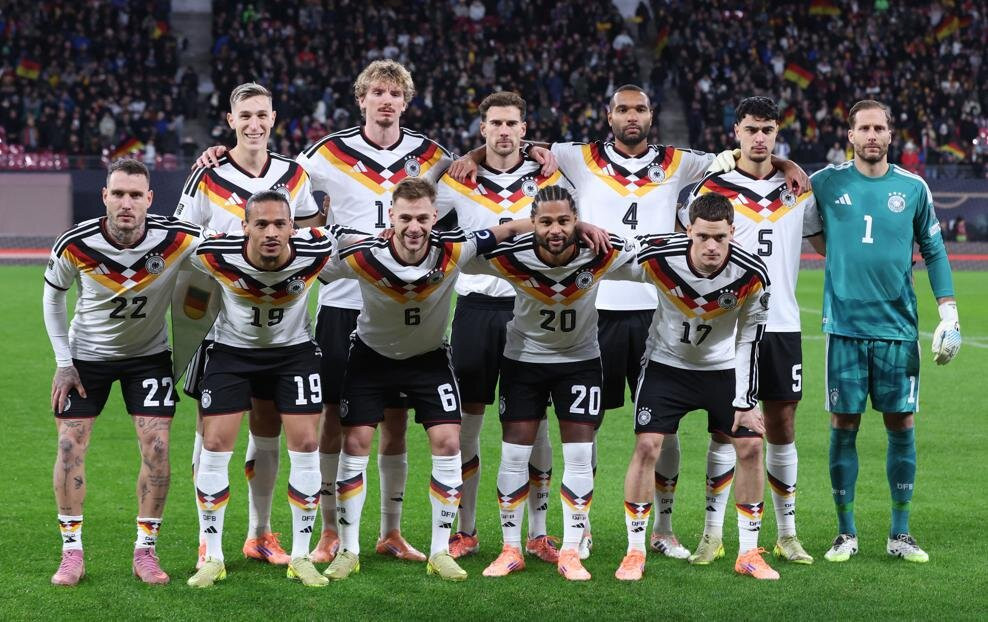
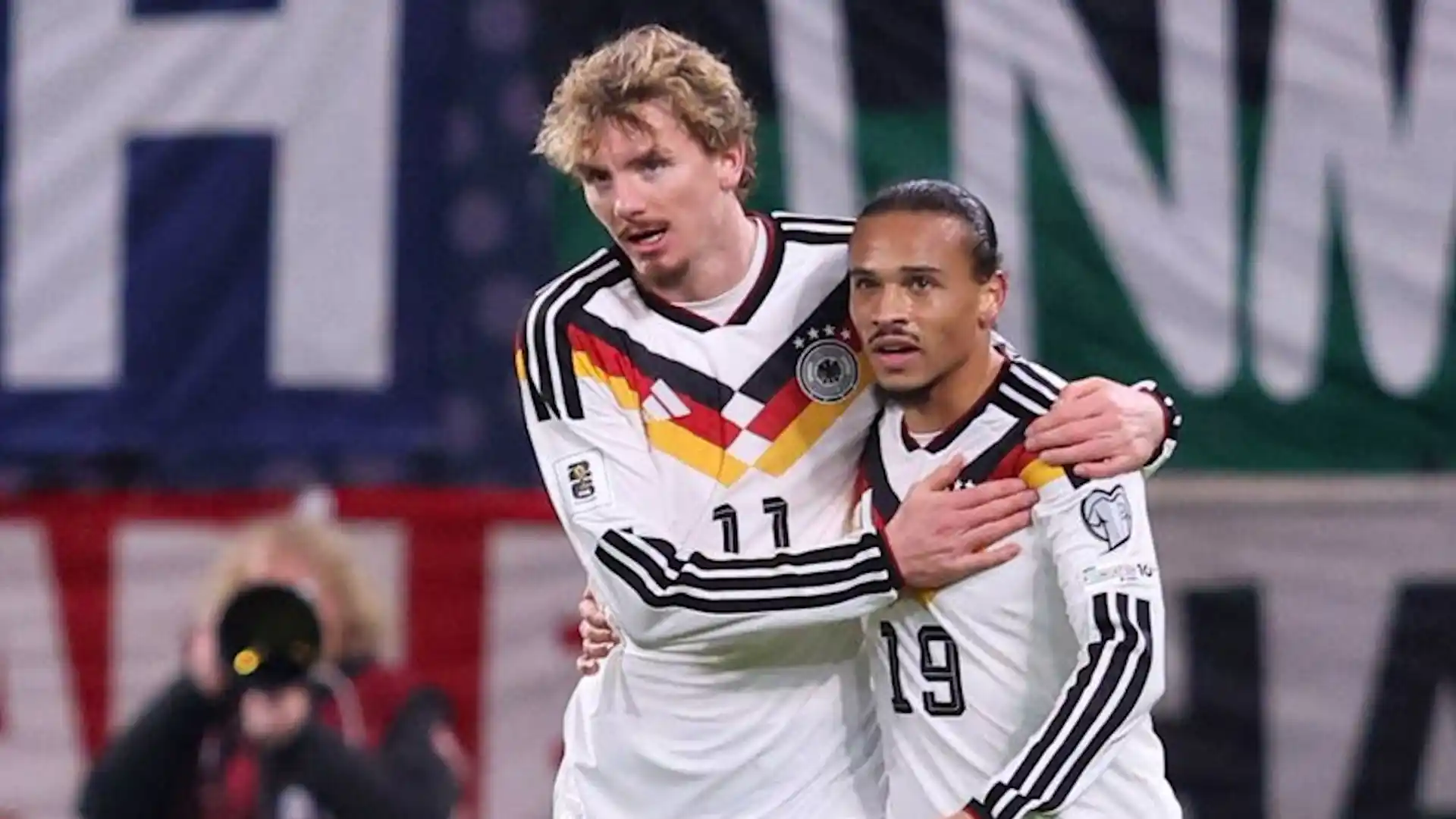
Captain Joshua Kimmich continues to provide leadership and tactical intelligence, even when deployed at right-back. Serge Gnabry offers pace and verticality, while Jamal Musiala and Florian Wirtz form one of the most technically gifted creative duos in international football.
Jonathan Tah anchors the defense, and further forward Germany can rely on versatile attacking options such as Kai Havertz and Newcastle striker Nick Woltemade.
A relatively manageable group containing Curacao, Ecuador and Ivory Coast should allow Germany to build momentum before the knockout rounds. They were similarly underestimated ahead of EURO 2024, yet still reached the quarter-finals before narrowly losing to eventual champions Spain in extra time.
However, that tournament was played on home soil.
This time, Germany travel to North America — a continent that has not always been kind to them. Their last World Cup campaign in the United States ended in disappointment back in 1994, and they now arrive after consecutive group-stage eliminations at the last two World Cups.
Reaching the knockout stage appears realistic. But a potential Round of 16 clash against France could quickly expose whether Germany are genuine contenders or merely a promising project still under construction.
Lessons Learned From Qualification
Nagelsmann made one thing very clear after the early loss to Slovakia: effort and intensity are non-negotiable.
“Maybe we should rely less on quality and more on players willing to give absolutely everything,” the former Bayern Munich coach said after the defeat, visibly furious with his team’s performance.
That message appeared to resonate. Germany played with significantly greater energy and discipline throughout the remainder of the campaign, eventually finishing first in Group A with 15 points from six matches, scoring 16 goals and conceding only three.
Yet questions over consistency remain.
Germany no longer resemble the polished machine that conquered Brazil in 2014. Instead, they are a team in transition — rich in talent, but still lacking the emotional maturity and tournament-tested backbone that traditionally defined German football.
Tactical Promise — And Tactical Risk
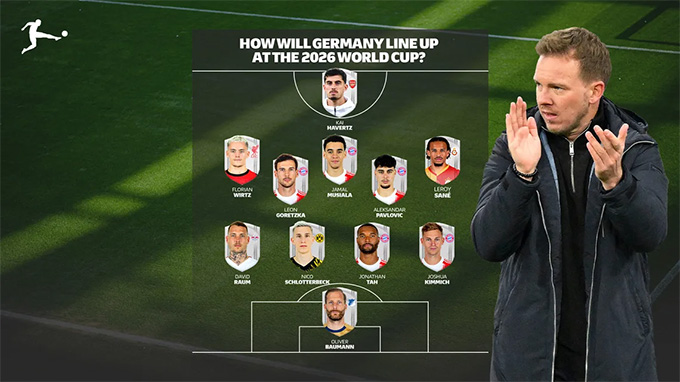
Nagelsmann’s greatest strength may also be his biggest risk.
The 38-year-old coach is regarded as one of Europe’s brightest tactical minds, known for constantly adapting systems depending on the opponent. He frequently alters structures, moves Kimmich between midfield and defense, and grants creative freedom to Musiala and Wirtz.
On paper, the flexibility is sophisticated and modern.
In practice, it can leave Germany without a stable tactical core — a dangerous weakness in short tournaments where cohesion often matters more than innovation.
When functioning properly, Germany can overwhelm opponents with aggressive pressing, rapid ball circulation and layered attacking movements. Gnabry, Havertz and Musiala thrive in high-tempo transitions, allowing Germany to dominate territory and create sustained pressure.
But vulnerabilities remain in midfield.
Without Emre Can, Germany lack a true controller capable of dictating rhythm and protecting defensive transitions. Leon Goretzka brings physicality rather than orchestration, while Aleksandar Pavlovic is still inexperienced at the highest level.
That imbalance has repeatedly hurt Germany in recent tournaments, particularly against teams capable of counterattacking quickly through midfield spaces.
World Cup 2026 may ultimately become the defining test of Nagelsmann’s managerial evolution: can he transform an exciting but unstable group into a complete tournament team?
Or will Germany once again remain trapped between potential and fulfillment?
Germany’s World Cup Legacy Still Carries Weight
Few nations carry the historical pressure Germany do at the World Cup.
They have participated in the tournament 21 times and lifted the trophy on four occasions — in 1954, 1974, 1990 and 2014 — second only to Brazil’s five titles.
From the “Miracle of Bern” in 1954 to the tactical dominance of 2014, Germany’s identity has long been built on discipline, resilience and tournament mentality.
But history alone will not win matches in North America.
This generation must now create its own legacy.
The Star: Jamal Musiala
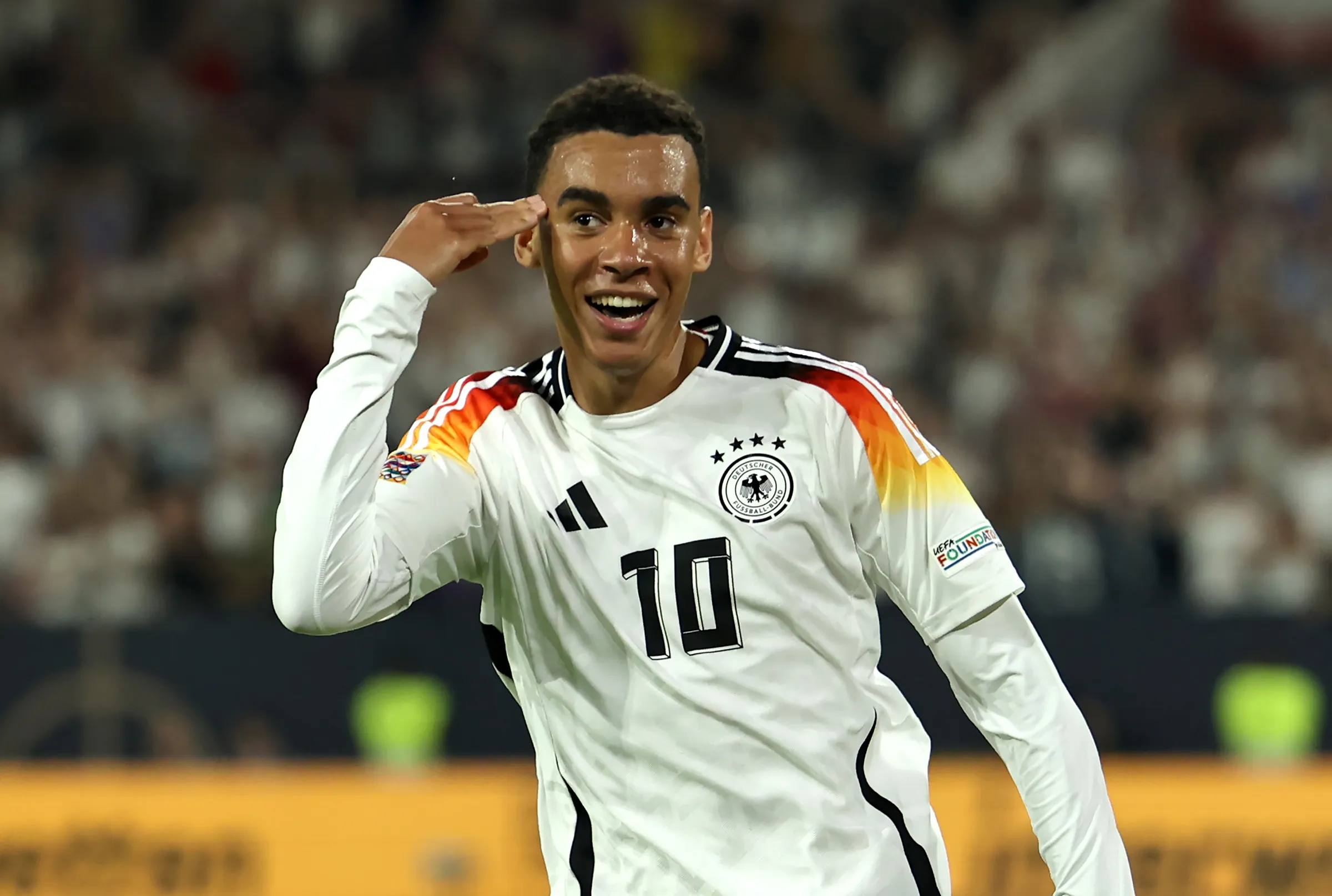
If Germany are to make a deep run, Jamal Musiala will almost certainly be at the center of it.
The Bayern Munich playmaker possesses the kind of technical brilliance capable of changing games in a single moment. Developed partly at Chelsea’s academy and once eligible for England, Musiala ultimately chose Germany — and has since become the creative heartbeat of the new generation.
Still only 23 years old, he has already surpassed 40 international appearances. His close control, quick combinations and fearless dribbling make him one of the most unpredictable attacking midfielders in world football.
Germany no longer have Kroos orchestrating matches from deep.
Now, much of the burden falls on Musiala’s imagination.
Group Stage Schedule
- June 15, 2026 — Germany vs Curacao
- June 21, 2026 — Germany vs Ivory Coast
- June 26, 2026 — Ecuador vs Germany
Head-to-Head Record
- vs Curacao: Never met
- vs Ivory Coast: 0 wins, 1 draw
- vs Ecuador: 2 wins, 0 draws, 0 defeats
World Cup 2026 Outright Odds
- 16/1 to win the tournament
Germany may no longer possess the aura of inevitability that once defined them. But under Nagelsmann, they remain dangerous, ambitious and unpredictable — perhaps the most fascinating version of Germany the football world has seen in years.