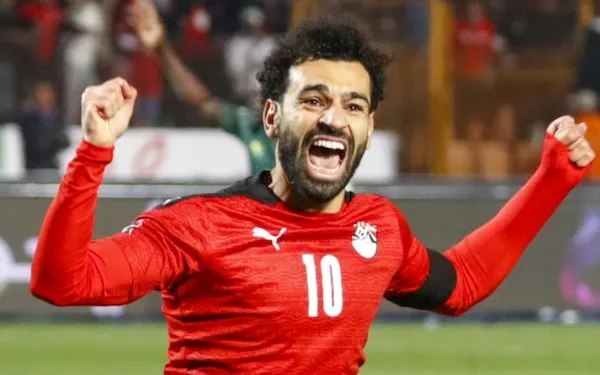
World Cup 2026
World Cup 2026 Group G Preview: Salah Challenges Belgium, Iran Ready to Cause an Upset
Group G at the 2026 FIFA World Cup brings together Belgium, Egypt, Iran and New Zealand in what promises to be one of the tournament's most unpredictable groups. Belgium arrive as favourites, but Mohamed Salah's Egypt are perfectly built to cause the upset of the group stage. Iran carry iron-willed defensive resilience, while New Zealand play with the freedom of underdogs. TuringStats breaks down every team's chances.
Group G at the 2026 FIFA World Cup: Not a Group of Death, But a Group of Intrigue
When the 2026 FIFA World Cup draw placed Belgium, Egypt, Iran, and New Zealand together in Group G, the immediate reaction from most pundits was straightforward: Belgium top the group, and one of the other three claims second place. Simple enough. But football, as it has demonstrated with gleeful regularity at every World Cup, rarely respects the neat conclusions of pre-tournament analysis.
Group G is not a group of death in the traditional sense. There is no collision of multiple genuine title contenders. The talent gap between Belgium at the top and New Zealand at the bottom is real and significant. But the distance between Egypt and Iran — the two teams competing most directly for that second qualification spot — and the Red Devils is far smaller than the rankings suggest. Mohamed Salah's individual brilliance alone has the capacity to reshape this group's narrative in a single moment, and Iran's capacity to frustrate technically superior opponents over 90 minutes is one of the most battle-tested qualities in Asian football.
This is a group that rewards attention. Here is TuringStats' full breakdown of every team's prospects in Group G.
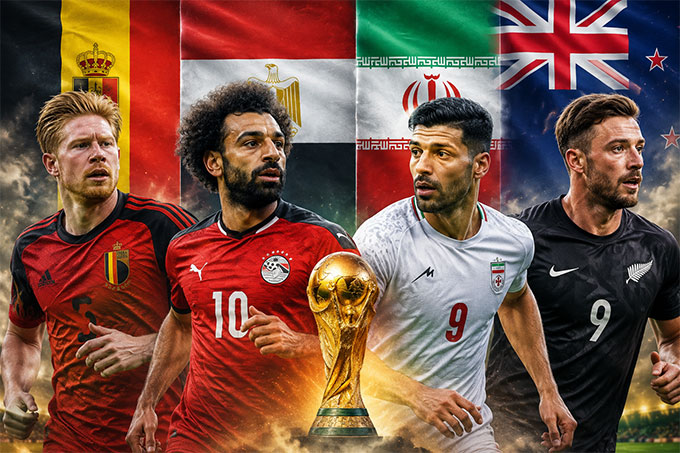
Belgium — The Post-Golden Generation Era Begins in Earnest
Belgian football has spent the better part of the last decade grappling with a question that has no comfortable answer: what comes after the Golden Generation? The extraordinary cohort of players — Eden Hazard, Thibaut Courtois, Kevin De Bruyne, Romelu Lukaku, Jan Vertonghen, Toby Alderweireld — that made Belgium the world's top-ranked side for a record-breaking 24 months may never be equaled in terms of sheer concentrated talent in a single generation. Reaching third place at the 2018 World Cup was their finest collective achievement; the failure to convert that talent into a major trophy remains Belgian football's defining modern regret.
In 2026, Belgium arrive at a crossroads. Several members of the Golden Generation have either retired or moved into the twilight of their international careers, and the transition to a newer, younger squad is still underway. And yet — the squad is far from weak. Kevin De Bruyne, still capable of moments of passing genius that no other player in the world can replicate, remains the creative heartbeat. Romelu Lukaku, for all the debates about his consistency at the very highest level, continues to produce goals with the kind of physical presence and intelligent positioning that most international strikers cannot match. Thibaut Courtois, the Real Madrid goalkeeper who is arguably the best in the world in his position, provides a last line of defense of rare quality. Jeremy Doku, the mercurial Manchester City winger, brings the pace and directness that can unlock the most organized defensive structures.
European media has consistently identified Belgium's greatest strength as their ability to control matches — to impose their tempo through possession-based play and dictate the terms of engagement against opponents who lack the technical quality to press high against them effectively. In Group G, that quality should prove decisive against Iran and New Zealand. The fixture against Egypt, however, requires special attention: Salah and Omar Marmoush in tandem represent a direct, speed-based counter-attacking threat that could disrupt Belgium's possession game if the defensive structure is not properly organized.
Belgium's title odds of 33/1 reflect a team that is good enough to reach the later stages of the tournament but not quite in the tier of Spain, France, or England as genuine contenders for ultimate glory. Their World Cup best remains third place, achieved in 2018. In Group G, they are the clear favorites — but they must earn that status on the pitch.
Qualification probability: 88%
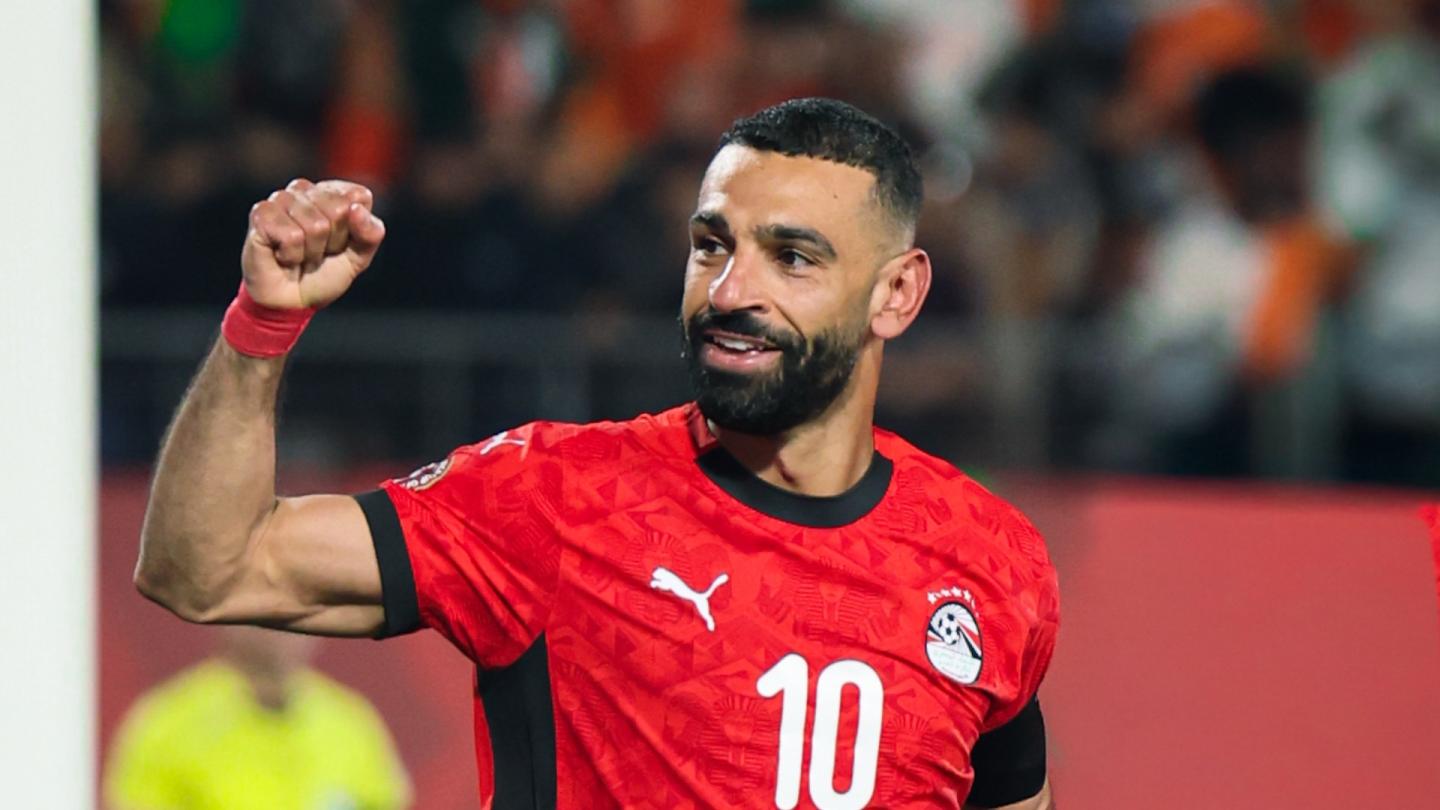
Egypt — Salah's Stage, and He Knows It
If there is one player at the 2026 FIFA World Cup whose presence on the pitch fundamentally changes the threat level of an entire nation, it may well be Mohamed Salah. The Egyptian forward — who has spent the past decade establishing himself as one of the finest footballers of his generation at Liverpool and beyond — arrives at this tournament carrying the hopes of a nation of over 100 million people and the burning personal desire to prove himself on the one stage where his remarkable club career has not yet been matched by equivalent international achievement.
Salah's gift is unique in international football: the ability to create something from almost nothing. His combination of extraordinary close-control dribbling, elite acceleration, precise finishing with both feet, and an almost telepathic understanding of where space will appear makes him a constant threat regardless of the tactical system deployed around him. There are games at which Salah has personally dismantled perfectly organized defensive structures through sheer force of individual quality. In a group where the margins between teams are relatively small, that capacity for a single moment of individual brilliance carries enormous significance.
Alongside Salah, the emergence of Omar Marmoush as a Premier League force — the Manchester City forward combining relentless pressing intensity with sharp goal-scoring instinct — gives Egypt a two-pronged attacking threat that is qualitatively superior to what most neutral observers might expect from an African qualifier. Egypt's forward line, when both are available and fit, offers a combination of Salah's creativity and Marmoush's directness that very few defensive setups are truly prepared for.
The Pharaohs are not a complete team in the manner that Belgium or Iran are — their defensive organization behind the attacking pair can be vulnerable to sustained pressure, and their midfield lacks the physical dominance to control games against European opposition for long periods. But in the expanded 48-team format, Egypt do not need to control games. They need to manage them, defend their shape when required, and then trust their forward players to produce the decisive moments that decide matches.
Historically, Egypt have qualified for three World Cups — 1934, 1990, and 2018 — without ever advancing beyond the group stage. The 2026 tournament, with Salah in the twilight of his international career, represents perhaps the final and best opportunity to break that pattern. The odds of 300/1 for outright glory are long; qualification from this group, however, is not just possible but genuinely likely if Egypt play to their attacking potential.
Qualification probability: 62%
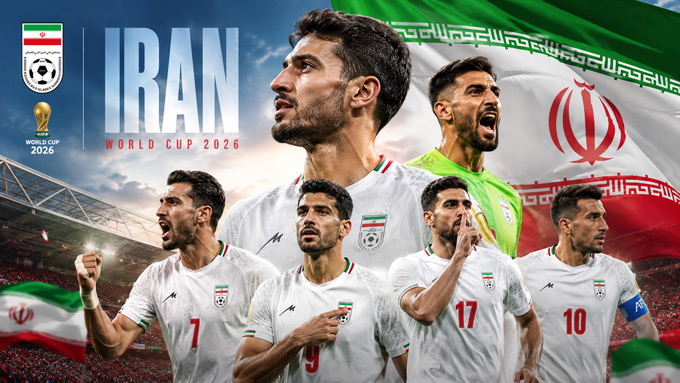
Iran — The Art of Being Impossible to Beat
Iran occupy a peculiar and fascinating position in global football. They are not a team that wins matches through aesthetic quality, technical superiority, or the individual brilliance of world-class names. They win — and more often draw, and occasionally frustratingly hold — through a collective discipline, defensive organization, and psychological resilience that has made them one of Asian football's most durable and difficult-to-beat propositions for the past two decades.
The Team Melli have participated in every major Asian qualification campaign with consistent success, reaching their sixth consecutive World Cup in 2026. Their core identity has remained broadly stable across multiple coaching generations: a low to mid-block defensive shape, compact lines, disciplined positional discipline from every outfield player, and a physical commitment to making life as uncomfortable as possible for technically superior opponents. On their best days, Iran can absorb sustained pressure for 70-80 minutes and then produce a set-piece or transition goal that has no right to be as decisive as it turns out to be.
Mehdi Taremi, the Porto striker who has quietly built a reputation as one of Asia's most technically accomplished forwards, remains Iran's most potent offensive weapon. His hold-up play, aerial threat, and ability to link the midfield and attack provides Iran with an outlet that allows the team to transition from defense to offense without simply clearing their lines. When Iran's defensive structure is holding and Taremi is linking play effectively, they are genuinely difficult to break down over 90 minutes.
The political difficulties that have surrounded Iranian football in recent years are impossible to ignore entirely, and the disruption those difficulties create to squad preparation and cohesion should not be underestimated. Yet the squad's competitive record suggests that whatever challenges exist off the pitch, Iran's players carry their nation's colors with enormous pride and a fierce determination to compete at the World Cup level.
In Group G, Iran's most winnable games are against New Zealand and potentially Egypt. A victory over New Zealand — which should be the minimum expectation — combined with either a draw or better against Egypt would put them in contention for the second qualification spot. The Belgium fixture is a very different kind of challenge, and a point there would be a significant achievement. Outright title odds of 500/1 are essentially decorative; second place in Group G is the realistic ambition.
Qualification probability: 38%
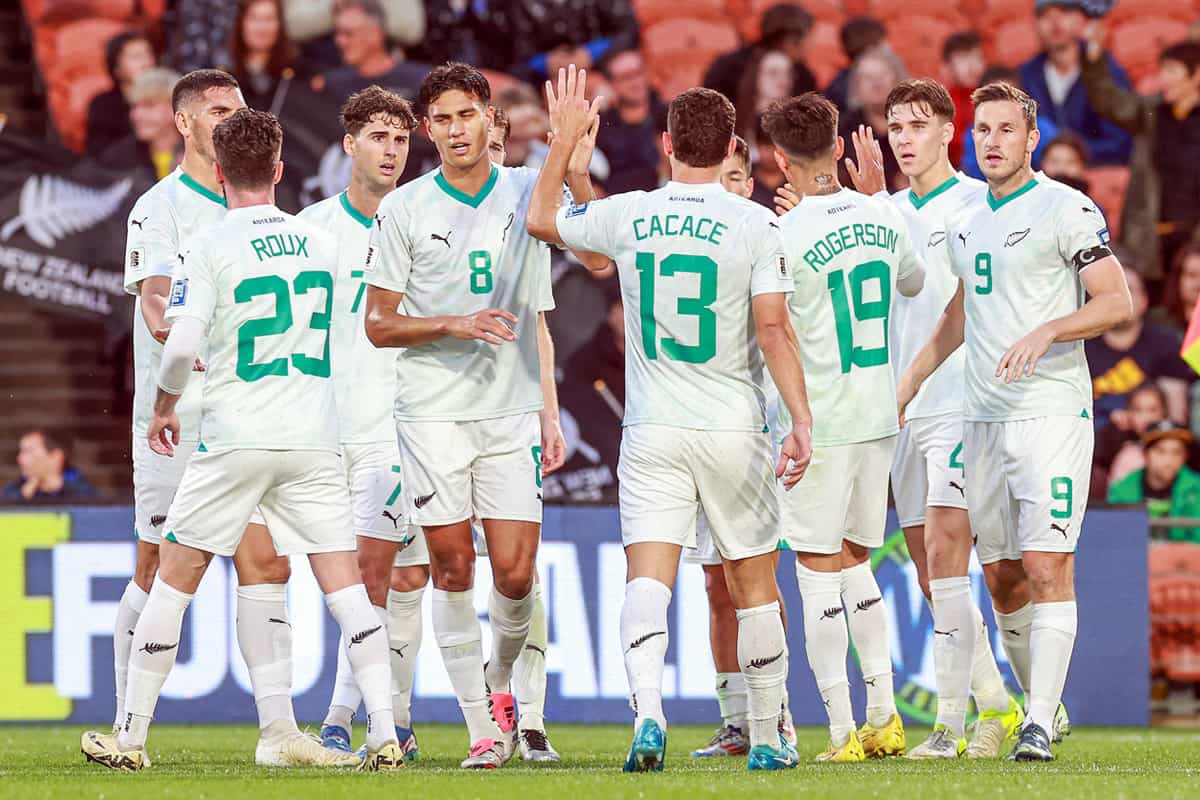
New Zealand — The All Whites Play Without Fear
New Zealand's presence at the 2026 FIFA World Cup represents the Oceanian confederation's continued effort to maintain a foothold on the global stage, and the All Whites deserve significant credit for qualifying from a region where the path to a World Cup is structurally one of the most arduous in world football. The OFC qualification process, while less rigorous in absolute terms than UEFA or CONMEBOL, requires a consistency and professionalism that should not be casually dismissed.
New Zealand are the group's clear underdogs, and that status — rather than being a burden — may actually work in their favor. Teams that arrive at a World Cup without significant pressure on their results play with a freedom and directness that can be deeply uncomfortable for opponents expecting a cautious, conservative performance. The All Whites' physicality-first approach to the game, combined with the presence of Chris Wood — a Premier League striker with experience across multiple English top-flight clubs — provides a focal point in attack that gives New Zealand a structural plan that is coherent if not sophisticated.
Wood's hold-up play and aerial ability makes him a target-man option that, in the right game state, could cause problems for defensive units not well-drilled in managing direct aerial threats. New Zealand's set-piece delivery, similarly, should not be dismissed: they have historically been effective from corners and free-kicks in ways that belie their overall quality level.
Realistically, New Zealand's goals in Group G are limited but clear: compete with full commitment in every fixture, make life uncomfortable for opponents regardless of the scoreline, and — if the stars align — cause the kind of minor upset that smaller nations cherish for generations. A point against Iran or Egypt in the right circumstances is not beyond them. Progression to the knockout stages, however, would require a series of results that goes well beyond any reasonable expectation.
Qualification probability: 12%
The Pivotal Fixture: Egypt vs. Iran
The direct head-to-head between Egypt and Iran is, in all probability, the match that will determine which of these two nations accompanies Belgium into the knockout rounds. It is a fascinating tactical contest: Egypt's pace, directness, and individual brilliance in attack against Iran's deep defensive structure, collective organization, and counter-attacking efficiency.
Salah versus Iran's defensive line is the specific matchup that will define the game. Iranian defenses are built to frustrate exactly the kind of one-against-one direct dribbling and sharp finishing that Salah specializes in. Whether Egyptian manager can create the space and service conditions for Salah to operate in his most dangerous zones — cutting in from the left, running at defenders in the half-space, arriving late at the far post — will determine whether Egypt's individual quality can overcome Iran's collective resilience.
Meanwhile, the Belgium vs. Egypt fixture carries significant implications for first place. If Egypt can extract a point from the Red Devils, they put themselves in a position where managing their remaining games becomes significantly easier. Belgium's possession control will be tested by Egypt's high-tempo counter-press led by Marmoush, and Salah's capacity to produce a decisive moment from nothing is a threat that no amount of tactical preparation can fully eliminate.
TuringStats Group G Predicted Final Standings
Based on our analysis of squad quality, tactical profiles, individual match-ups, and recent form, here is how we project Group G to finish:
1. Belgium — Their squad depth, European pedigree, and collective experience make them the clear favorites for first place. De Bruyne's creative brilliance and Courtois's goalkeeping provide the ceiling and floor that the group's other teams cannot match. Expect a professional, controlled group campaign.
2. Egypt — Salah's individual quality is the single most disruptive factor in the entire group. If he is fit, motivated, and properly supported by Marmoush's pressing and link-up play, Egypt have every quality needed to take second place. Their biggest risk is failing to convert Salah's moments of genius into points against Iran's disciplined defense.
3. Iran — Disciplined, resilient, and capable of making every game they play deeply uncomfortable for the opposition. Their route to second place runs through an Egypt side that can be vulnerable on the counter when pressing high — and if Salah has an off day or picks up a knock, Iran are well positioned to take advantage. Their outright odds of 500/1 tell you everything about their ceiling; their group-stage qualification odds are considerably more flattering.
4. New Zealand — The group's free spirits. They will compete, they will cause discomfort in at least one game, and they will leave Group G with their heads high regardless of the points tally. The All Whites contribute the underdog energy that makes the World Cup group stage so compelling.
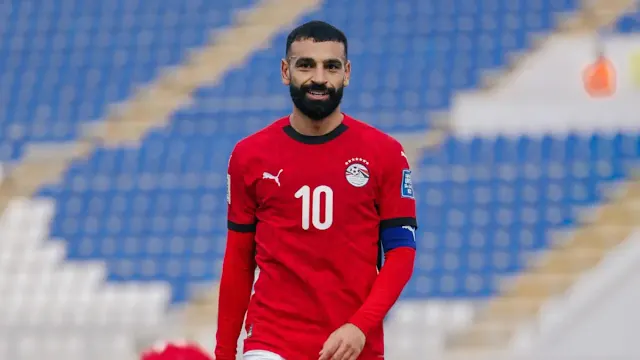
The Salah Factor: One Player, One Group, One Last Chance
It would be remiss to conclude any analysis of Group G without dwelling on what Mohamed Salah's presence at the 2026 World Cup means beyond the tactical and statistical. This is, in all likelihood, Salah's final opportunity to perform on the sport's grandest stage at or near the peak of his considerable powers. The clock on elite football careers runs in one direction only, and Salah — whose commitment, professionalism, and sustained excellence have made him one of the most admired figures in modern football — has earned the right to a World Cup moment that matches his club legacy.
Whether that moment comes in Group G or whether it becomes the tournament's great unfulfilled story depends on factors that no preview can predict. But for the 100 million Egyptians who will be watching every touch, every run, and every chance that Salah creates or converts, Group G carries a significance that goes well beyond football statistics. It carries the weight of a nation's dreams, and the hope that one genius can write his own ending.